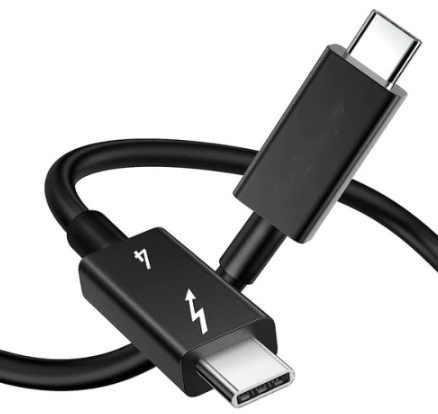
In modern enterprise environments, managing and uniformly deploying office equipment faces unprecedented complexity. Due to diverse work models, Windows and macOS devices coexist within enterprises, accompanied by multi-generational hardware transitions. This hardware ecosystem fragmentation makes verifying docking station compatibility a core challenge in enterprise IT asset management. This article delves into the technical logic behind interface protocols and explores how to achieve true cross-platform compatibility through specific graphics technologies.
Interface Protocol Fragmentation: The Technical Root of Compatibility Challenges
When enterprises or different departments adopt laptops with varying specifications, peripheral connection compatibility barriers emerge. In the current hardware market, although the USB-C interface is gradually unifying in physical form, the underlying protocols it carries vary drastically.
The Disconnect Between Physical Interfaces and Underlying Protocols: Early le-gacy devices were only equipped with USB-A ports, while modern devices have fully transitioned to USB-C. However, even identical-looking USB-C ports may house completely different technical specifications, including basic USB-C (data transfer only), full-featured USB-C (including DisplayPort Alt Mode video output), and higher-bandwidth USB4, Thunderbolt 3, Thunderbolt 4, and even Thunderbolt 5 protocols.
Display Logic Differences at the Operating System Level: Windows and macOS employ different system architectures when handling external monitor output. For example, MacBooks equipped with Apple Silicon (such as M1, M2, and M3 chips), constrained by their underlying hardware design, natively support only a single external monitor output without the assistance of specific external hardware and software.
This means a conventional docking station designed based on a specific protocol (e.g., relying solely on DisplayPort MST or Thunderbolt protocols) might work perfectly on a full-featured Windows device but fail completely on a MacBook or an older device lacking video output protocols. To achieve broad compatibility that ignores host hardware differences, the underlying conversion logic of a universal docking station must be introduced.
Breaking Hardware Barriers: Universal Solutions Based on DisplayLink Technology
To address the aforementioned cross-platform and cross-interface compatibility pain points, the industry has introduced solutions based on DisplayLink graphics conversion technology. This is the core reason universal docking stations can achieve broad compatibility.
The operational mechanism of DisplayLink technology differs from traditional video signal passthrough (like DP Alt Mode). It efficiently compresses and processes video signals through the host's CPU/GPU, then converts this video data into a standard data stream transmitted via a conventional USB 3.0 data channel to the docking station. Finally, a decoding chip inside the dock restores the video signal for output to the monitor.
This "data-fied" transmission of video signals brings significant technical advantages:
1. Eliminating Reliance on Specific Video Protocols: Because signals are transmitted through standard USB data channels, universal docking stations no longer strictly require the host's Type-C port to have DisplayPort Alt Mode or Thunderbolt protocols.
2. Overcoming Physical Interface Limitations: Whether it is an older laptop equipped with a traditional USB-A port or a modern device with the latest USB-C port, high-quality video output can be achieved as long as it has USB 3.0 (or higher) data transmission capabilities.
3. Breaking Native System Display Limits: By installing the appropriate drivers, this technology can bypass the hardware limitations of certain operating systems (like base-model Apple Silicon chips), easily achieving dual or even triple multi-monitor extension, significantly boosting productivity.
Common Technical Q&A on Universal Docking Station Selection and Deployment
To further clarify the practical application of universal devices in mixed workspaces, the following answers common technical questions based on their underlying principles:
Q: Why are standard docking stations prone to being "picky about devices" in a mixed laptop environment?
A: Because laptops of different brands and models vary greatly in operating systems, interface forms (USB-A vs. USB-C), and underlying interface capabilities (power delivery, video output, data bandwidth). Standard docking stations lacking an underlying graphics conversion chip rely heavily on the host's own hardware output capabilities, thus failing to achieve a "one-size-fits-all" solution.
Q: How do universal docking stations support le-gacy USB-A devices?
A: The core principle of DisplayLink-based universal docking stations is utilizing standard USB data channels to transmit compressed video streams. Therefore, as long as the motherboard provides a standard USB-A (3.0 and above) port, it can successfully complete the expansion and transmission of video signals, making it highly suitable for enterprise environments transitioning between old and new devices.
Q: What are the necessary conditions for MacBook devices to achieve multi-monitor display using such docking stations?
A: For the macOS ecosystem, the core requirement is that the system must have the DisplayLink Manager driver installed.
For models equipped with M1/M2/M3 chips, this driver can break through their native single-screen output hardware bottleneck to achieve multi-monitor extension.
For high-end models equipped with M4/M5 chips, although their hardware natively supports multiple screens, this driver is still required to handle underlying data encoding and decoding when connecting to docking stations based on this technology.
Q: Will this technology significantly consume laptop system resources?
A: The compression and transmission of video signals do require the utilization of some system CPU and GPU resources. However, thanks to continuous algorithm optimization, under regular scenarios such as daily office work, web browsing, coding, and light graphics processing, this resource usage is extremely low, and the impact on overall system performance is almost negligible.
Q: Is the deployment process complicated in a Windows environment?
A: It is highly simplified. In the vast majority of modern Windows systems (Windows 10/11), when the device is first connected to a universal docking station, the underlying Windows Update will typically silently fetch and install the required DisplayLink driver automatically, achieving plug-and-play functionality. If the enterprise intranet restricts automatic updates, IT personnel can also download and deploy it uniformly through official channels.