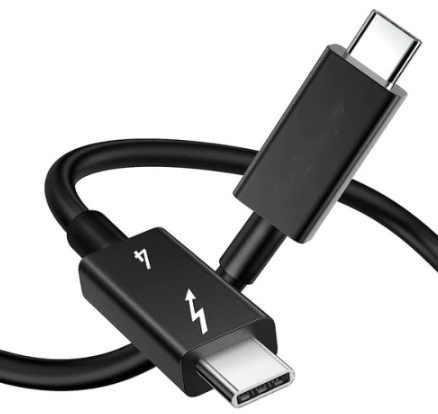
Enterprise IT asset configuration is facing unprecedented fragmentation challenges. Within the same open-plan office, there is often a mix of top-tier mobile workstations equipped with Thunderbolt 4, ultra-thin laptops supporting only basic USB-C, and Apple M1/M2/M3 devices limited by native single-screen output.
When IT departments proceed with Mass IT Deployment, the most common pitfall is merely comparing the "port count" of peripherals. In reality, the causes of 80% of helpdesk tickets—such as black screens, peripheral disconnections, and PD handshake failures—stem from severe mismatches between the underlying docking architecture and the host hardware.
This guide strips away redundant marketing parameters and targets the underlying hardware IC topology, providing highly practical Enterprise Docking Station Deployment technical selection references for IT buyers planning Multi-monitor Workstations.
Core Selection Logic: Distinguishing the Architectural Differences Between Hubs and True Docking Stations
Before advancing large-scale procurement, it is crucial to clarify the underlying differences between consumer-grade USB Hubs and enterprise-grade Docking Stations.
True enterprise-class docking stations abandon the cheap single-controller signal splitting approach and adopt multi-protocol routing via multiple discrete ICs. This means video protocols, data packets, and power delivery have independent physical channels and parsing chips (e.g., RTD2183 display IC, VL103 PD protocol IC, RTL8153 Gigabit Ethernet IC). This hardware-level physical isolation is the cornerstone for ensuring the stable operation of enterprise 24/7 high-load workstations.
Underlying Display Architecture Analysis: USB-C/Thunderbolt Docking Station Comparison
The display compatibility of a docking station does not depend on the brand, but on the generation and transmission path of the video signal. Mainstream enterprise deployments typically face the choice of the following three technology paths:
1. Thunderbolt Docking Stations: Native GPU Physical Passthrough
Mechanism: Utilizes PCIe tunneling technology to pass the host's discrete graphics (GPU) computing power directly to external monitors without reservation.
Performance: Provides ultra-low input latency and lossless image quality, with single-cable throughput up to 40Gbps (Thunderbolt 4) or 80Gbps (Thunderbolt 5).
Deployment Scenario: Tailor-made for heavy graphics rendering, CAD modeling, and 4K/8K video editing workstations.
Procurement Pain Point: Extremely high hardware costs, and poor backward compatibility with older non-Thunderbolt laptops. Not suitable for highly fluid hot-desking shared environments.
2. USB-C Alt-Mode and MST Technology: Physical Bandwidth Slicing
Mechanism: Relies on DisplayPort Alternate Mode, reallocating some physical pins of USB-C to video signals. Combined with MST (Multi-Stream Transport) technology, it forcibly splits a single video stream to multiple screens.
Performance: Zero extra driver dependency, plug-and-play. However, total bandwidth is severely limited by the USB-C interface version, highly prone to resolution degradation.
Deployment Scenario: Budget-sensitive basic dual-screen Windows office environments.
Procurement Pain Point: A fatal system-level flaw—macOS natively does not support MST extended displays. Forcing such docks onto Mac devices will result in multiple external screens showing the exact same mirrored image.
3. DisplayLink Universal Architecture: Software-Level CPU Rendering
Mechanism: Bypasses physical GPU limitations. By installing underlying drivers, it uses the host CPU to adaptively compress the video stream, converts it into standard USB data packets for transmission, and decodes it into a video signal via an independent IC inside the dock.
Performance: Boasts dominant cross-system compatibility. Forcibly breaks through the single-screen hardware limitation of basic Apple M-series chips, easily lighting up triple or even quad-screen matrices.
Deployment Scenario: Financial data monitoring rooms, code compilation development teams, and highly complex BYOD (Bring Your Own Device) mixed office environments.
Procurement Pain Point: Relies on CPU computing power, causing minor latency during heavy 3D gaming (imperceptible for daily office work), and due to HDCP protocol restrictions, cannot capture or play DRM-protected streaming media.
| Evaluation Dimension | Thunderbolt | USB-C Alt-Mode (with MST) | DisplayLink |
| Main Video Rendering | Native GPU | Native GPU | Host CPU |
| Cross-system Consistency | Weak | Extremely Poor (macOS doesn't support MST) | Extremely Strong (Windows/macOS/ChromeOS) |
| Typical Multi-monitor Limit | 2 Screens (High-Res) | 2-3 Screens (Low-Res) | Up to 4+ Screens |
| IT Deployment Friendliness | Picky about host port | Picky about OS architecture | Universal plug-and-play, lowest maintenance cost |
Three Pitfall Avoidance Guides for Mass IT Deployment
Stepping away from theoretical architecture, in actual enterprise-level procurement execution, IT teams must strictly avoid the following systemic risks:
Pitfall 1: Breaking the "Ecosystem Barrier" of OEM Docking Stations
Many enterprises are used to purchasing OEM docking stations of the same brand as their laptops (e.g., Dell, HP, Lenovo). This strategy works in a single-hardware environment, but during hardware refreshes or when introducing cross-brand hosts, it is highly prone to trigger firmware-level exclusivity verification. Universal docking stations have a neutral underlying logic, focusing on I/O throughput, which can completely eliminate this hidden Vendor Lock-in cost.
Pitfall 2: Beware of the "False Labeling" Trap in PD Power Protocols
Enterprise multi-monitor workstations usually require docking stations to provide no less than 85W of continuous re-verse charging (Power Delivery). Inferior hubs use shared step-down solutions, and under high load, are highly likely to cause the host to lose power and crash due to the upstream 5V/0.9A physical limitation. When auditing hardware BOM specs, it is mandatory to confirm that the device is equipped with a dedicated PD handshake protocol IC (such as the industry-standard VL103 IC) to ensure accurate high-voltage power negotiation with the host.
Pitfall 3: The Rigid Demand for Physical Layer Isolation in LANs
For enterprises heavily reliant on local ERP or NAS arrays, Wi-Fi packet loss is intolerable. Do not purchase cheap peripherals that simulate network environments via software. Enterprise-grade standards require the docking station to have a built-in, dedicated Gigabit Ethernet MAC/PHY physical layer chip (such as RTL8153) to guarantee extremely stable intranet data throughput.
PURPLELEC: A Professional OEM Docking Station Supplier Reshaping Terminal Connectivity
In highly complex commercial topology environments, docking stations are no longer simple port adapters, but edge computing nodes that take over high-frequency data streams and power scheduling. Blindly purchasing cheap hardware with unclear architectures will only multiply costs passed onto subsequent IT maintenance.
As a veteran OEM docking station supplier deeply cultivated in underlying bus technology for years,PURPLELEC refuses to compromise with low-cost public templates. Our enterprise-grade product lines strictly adhere to multi-protocol routing specifications via multiple discrete ICs, comprehensively covering Thunderbolt high-end arrays and DisplayLink multi-screen universal solutions.
From PCB-level main control chip selection (covering top-tier material matrices like RTD2183, VL103, RTL8153) to rigorous cross-platform compatibility aging tests before leaving the factory, PURPLELEC is committed to providing global enterprise IT buyers and channel distributors with source-level hardware deployment solutions that offer extremely low failure rates and high TCO returns.
Optimize your IT asset topology today: Visit the PURPLELEC official website to access customized expansion deployment blueprints tailored for modern multi-monitor workstations.